
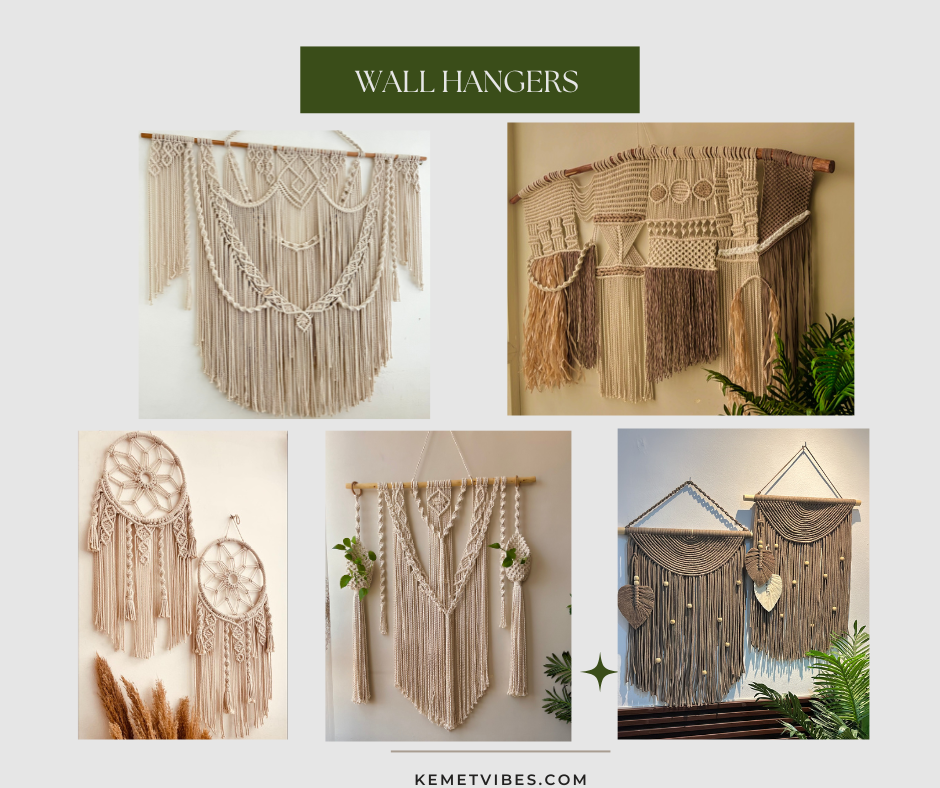
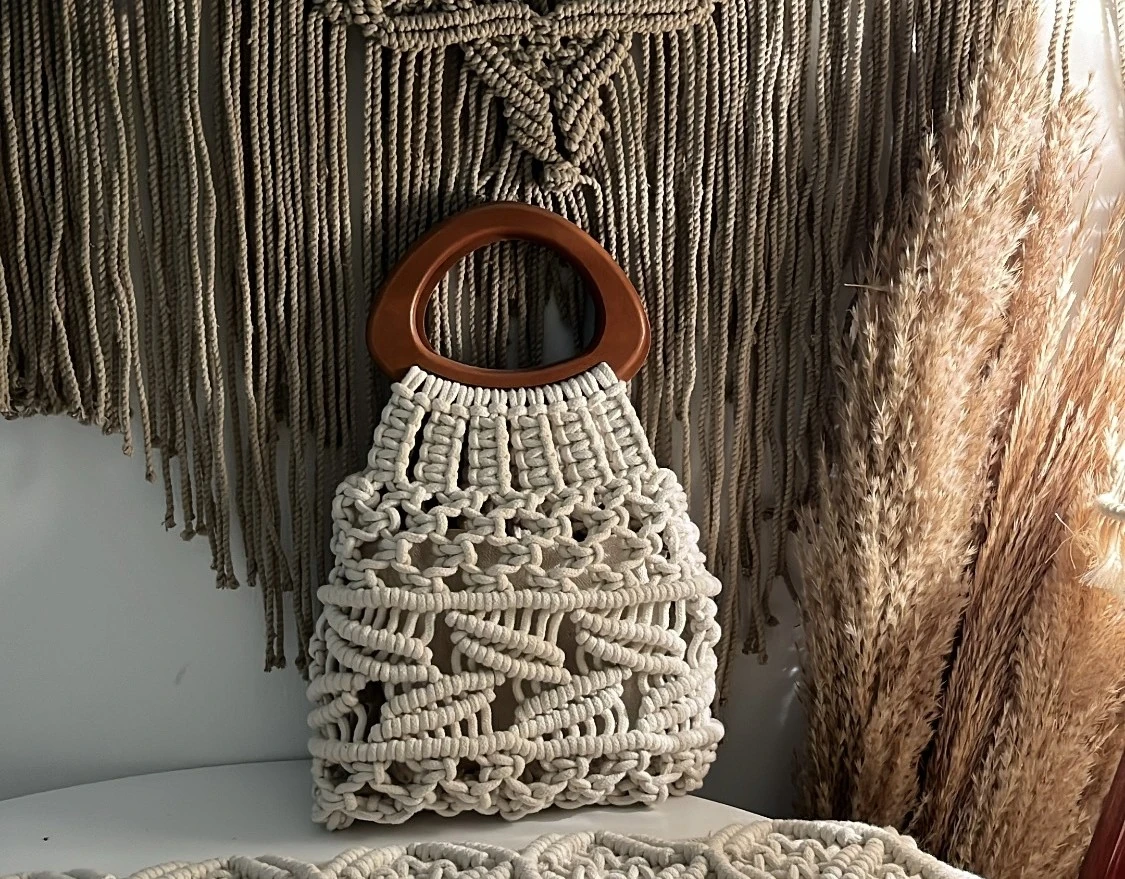
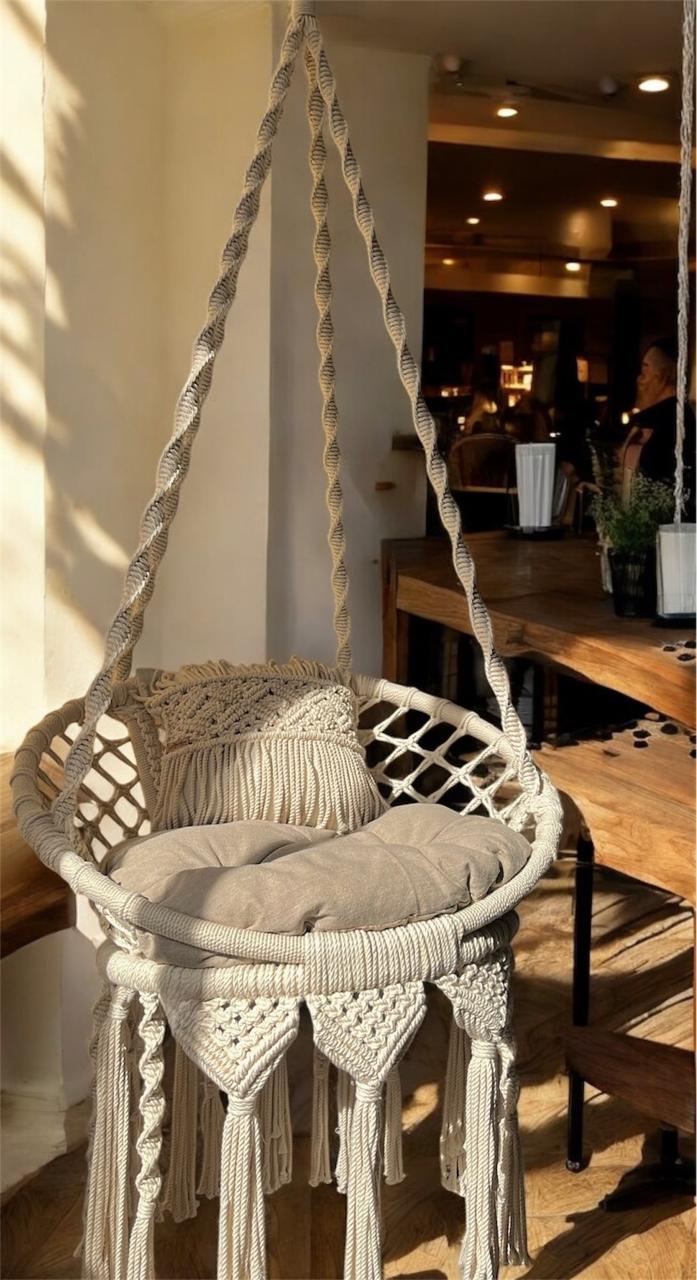
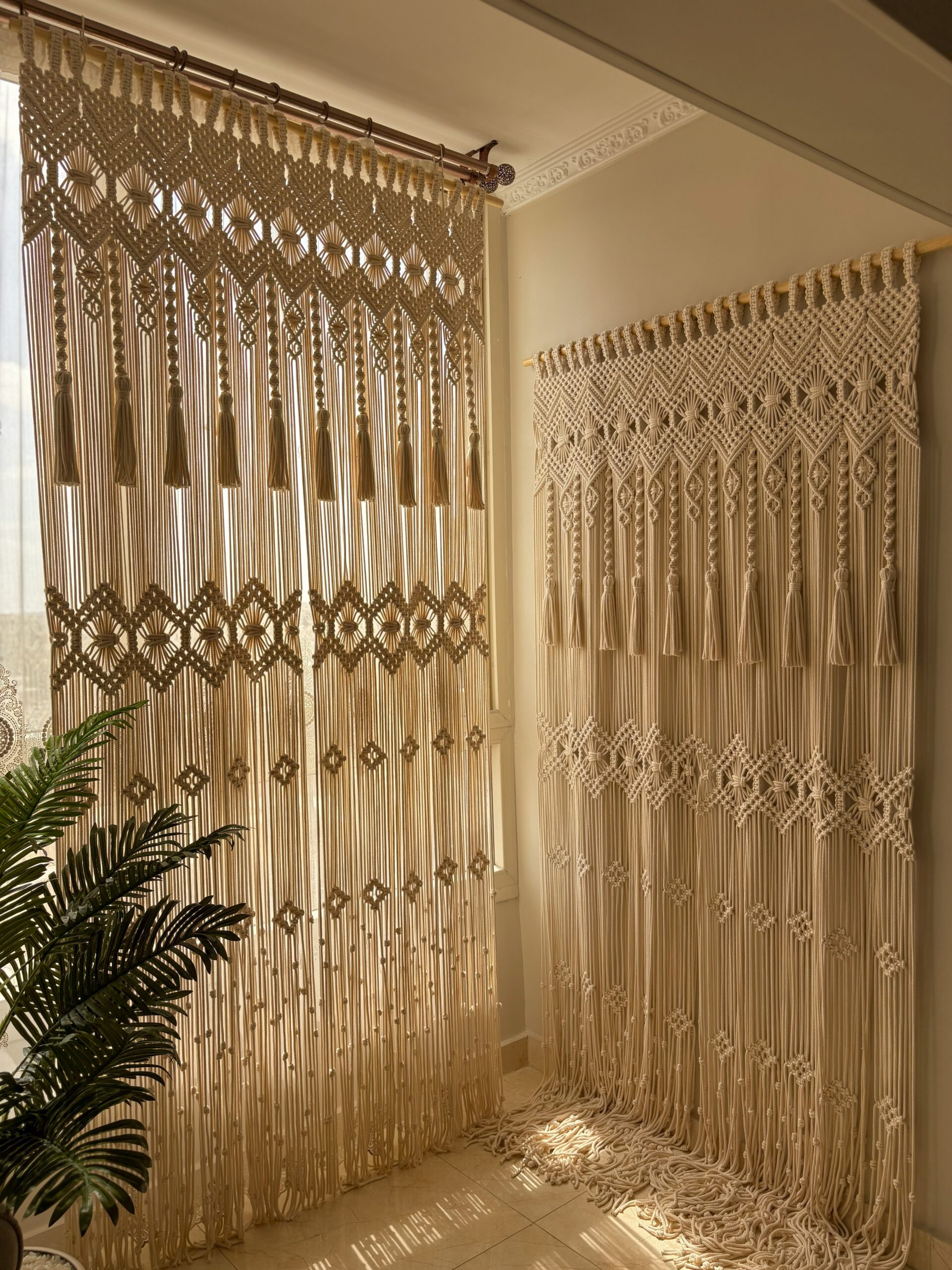
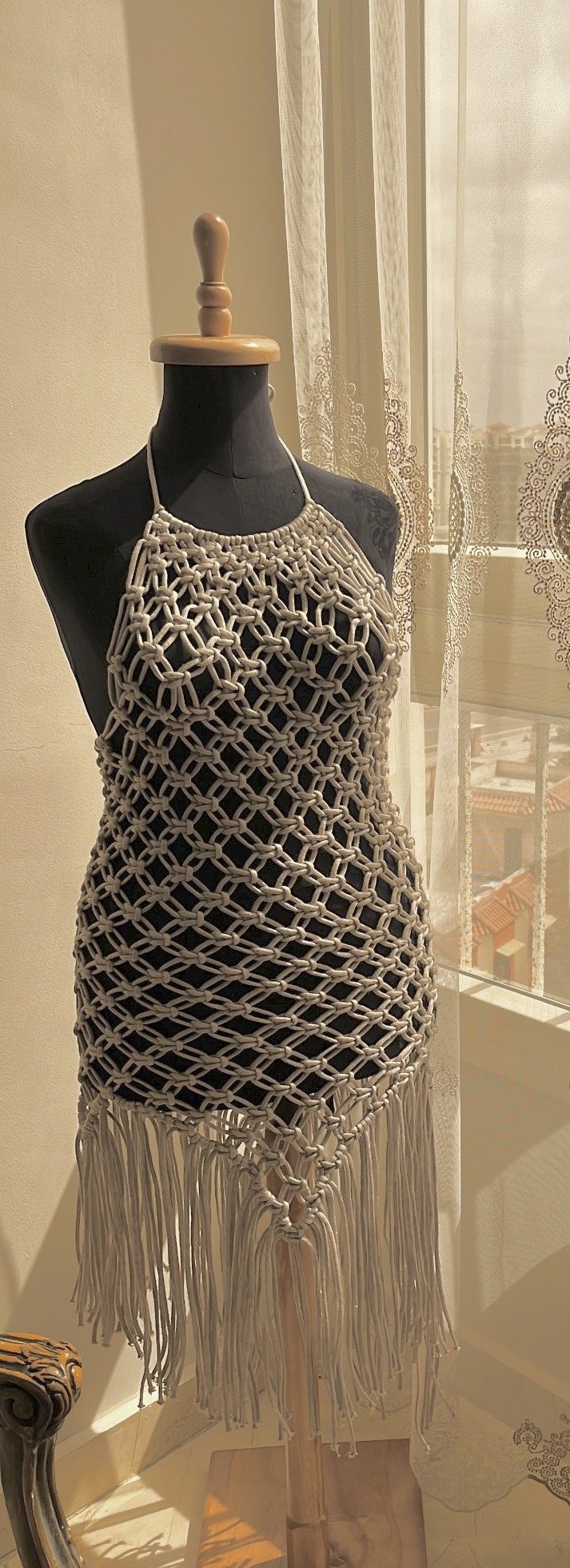
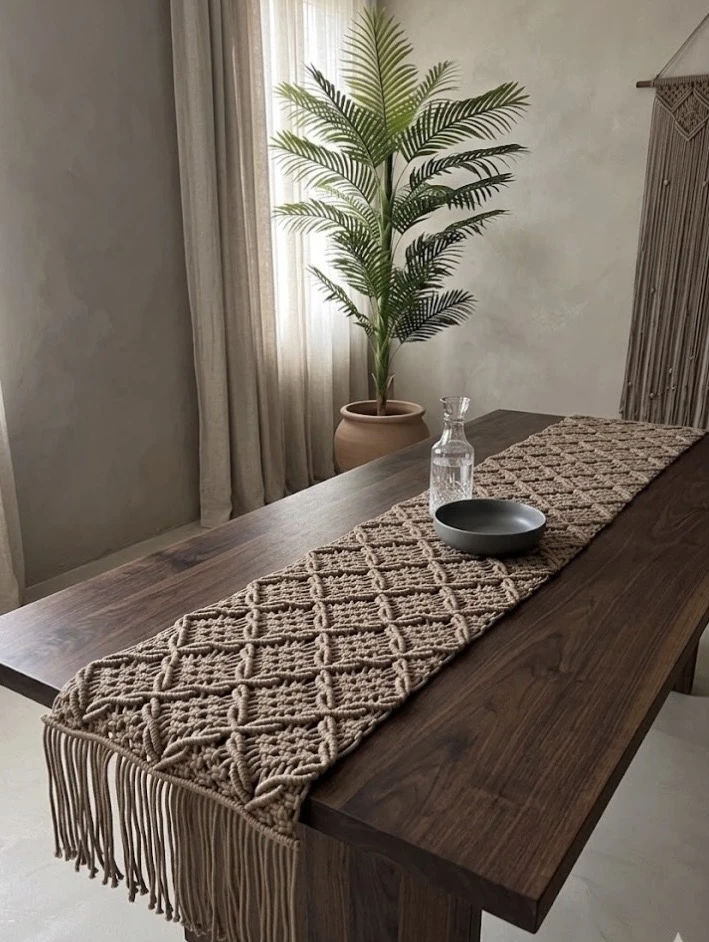
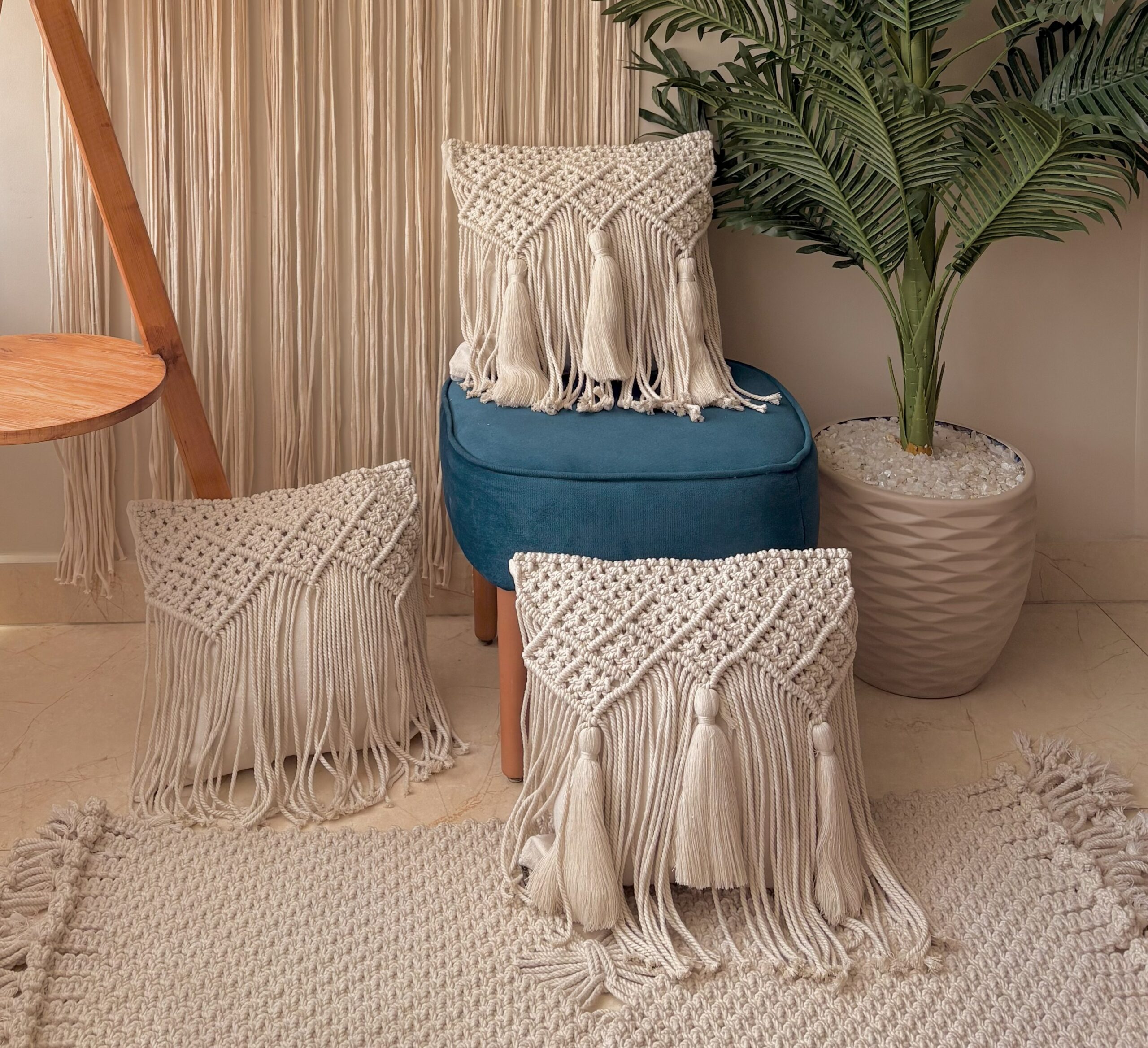
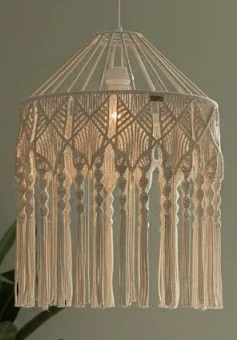
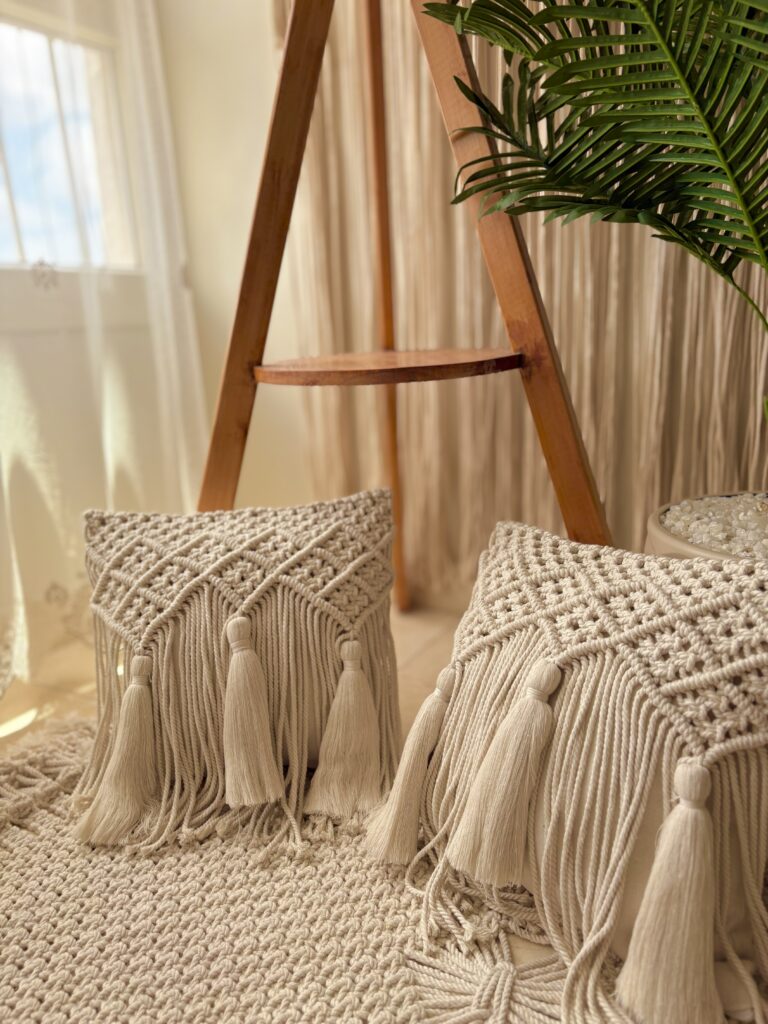
Macrame is a timeless form of textile art that uses knots to create decorative and functional pieces. Originating centuries ago believed to have begun with 13th century Arab weavers who used knots to finish the loose ends of fabrics macrame spread across Europe and later became a beloved global craft.
How Macrame Is Made
At its core, macrame requires only a few materials:
- Cord: Usually made from cotton, jute, hemp, or synthetic fibers.
- Support rod or ring: A wooden dowel, metal ring, or branch to anchor the knots.
- Scissors & Measuring tools: To cut and size cords accurately.
Artists tie various knots like the square knot, lark’s head knot, and half-hitch knot in intricate patterns. The designs range from minimalist wall hangings to complex plant holders, curtains, handbags, and even jewelry.
The Crafting Process
- Preparation: Measure and cut cords to the desired length.
- Mounting: Secure cords to a support rod using a lark’s head knot.
- Designing: Create patterns by alternating knots in sequences.
- Finishing: Trim and brush the ends to achieve a soft, fringed look.
Each macrame piece is entirely handmade, making every creation unique. The slow, repetitive motion of knotting offers a calming, almost meditative experience turning crafting into a mindful art form.
Why People Love It
Beyond its aesthetic appeal, macrame celebrates sustainability and mindfulness. Many artisans use eco-friendly cotton and natural dyes, producing decor that blends beauty with environmental care. Its resurgence today reflects a desire to reconnect with handmade artistry in an increasingly digital world.


A WordPress Commenter
Hi, this is a comment.
To get started with moderating, editing, and deleting comments, please visit the Comments screen in the dashboard.
Commenter avatars come from Gravatar.